American Radon Solutions, Inc.
New construction & passive systemsRadon mitigation systems
- PA DEP Certified radon mitigation firm: 1418
- PA DEP Certified radon mitigator: 1419
Activating a builder's passive rough-in by adding a fan and sealing, and radon-resistant new construction (RRNC) piping for houses being built.
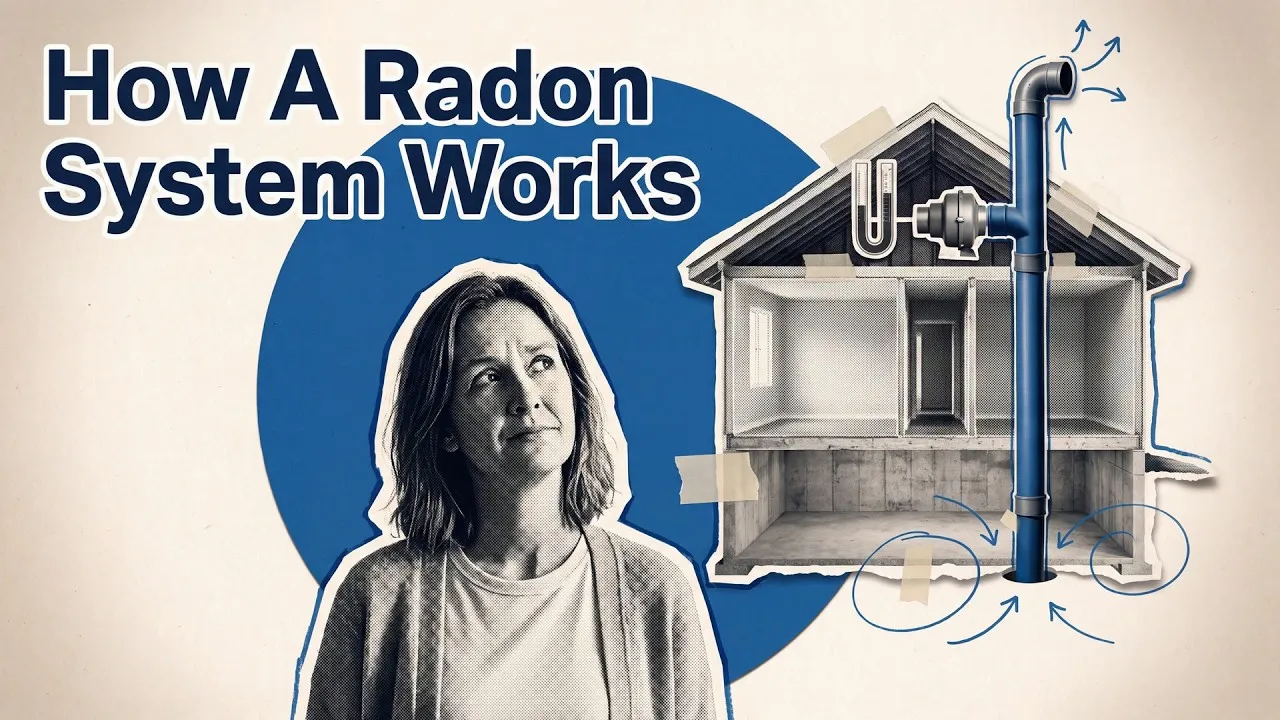
Read the guide: Activating a builder's passive system, in the fan guide, and how a radon mitigation system works
A passive system is the same pipe with no fan. It relies on the stack effect alone and typically cuts radon by a third to a half, which in a Zone 1 county is rarely enough. The builder's rough-in is not guaranteed to work as installed either: many have no proper suction pit under the slab and poor sealing. Activation means a certified mitigator adds an in-line fan in the attic, fits a manometer, checks the sealing and tests afterwards, which is what the DEP expects of any mitigation job. Done at build time, radon-resistant piping makes that later activation a small job instead of a retrofit.
Many newer houses in the York Township and Dallastown developments were built with a passive rough-in: a capped pipe running from under the slab up through the house, with no fan. A passive system lowers radon a little; in a Zone 1 county it usually needs the fan. Activating one costs about $500 to $1,000 for the fan, manometer and sealing, more if the rough-in has no suction pit and one has to be added.
The contractors here also do radon-resistant new construction, which means the sub-slab piping, sealing and vent stack are designed in while the house is being built, so a fan can be added later for the cost of an activation instead of a full retrofit.
The DIY guide covers what you may do yourself in Pennsylvania and how to verify a contractor's certification.
New construction & passive systemsRadon mitigation systems
New construction & passive systemsRadon mitigation systemsRadon testing & inspection