A pipe, a fan and a gauge keep the pressure under the slab lower than in the basement. How each part of a York County radon system works and how to tell it is still running.
Chapters
Transcript
0:00 It's a pipe, a fan and a gauge. Together, they keep pressure underneath the concrete slab lower than inside the basement.
0:10 Everything begins at the suction point, a hole cored through the concrete slab, or the existing sump pit underneath a sealed lid.
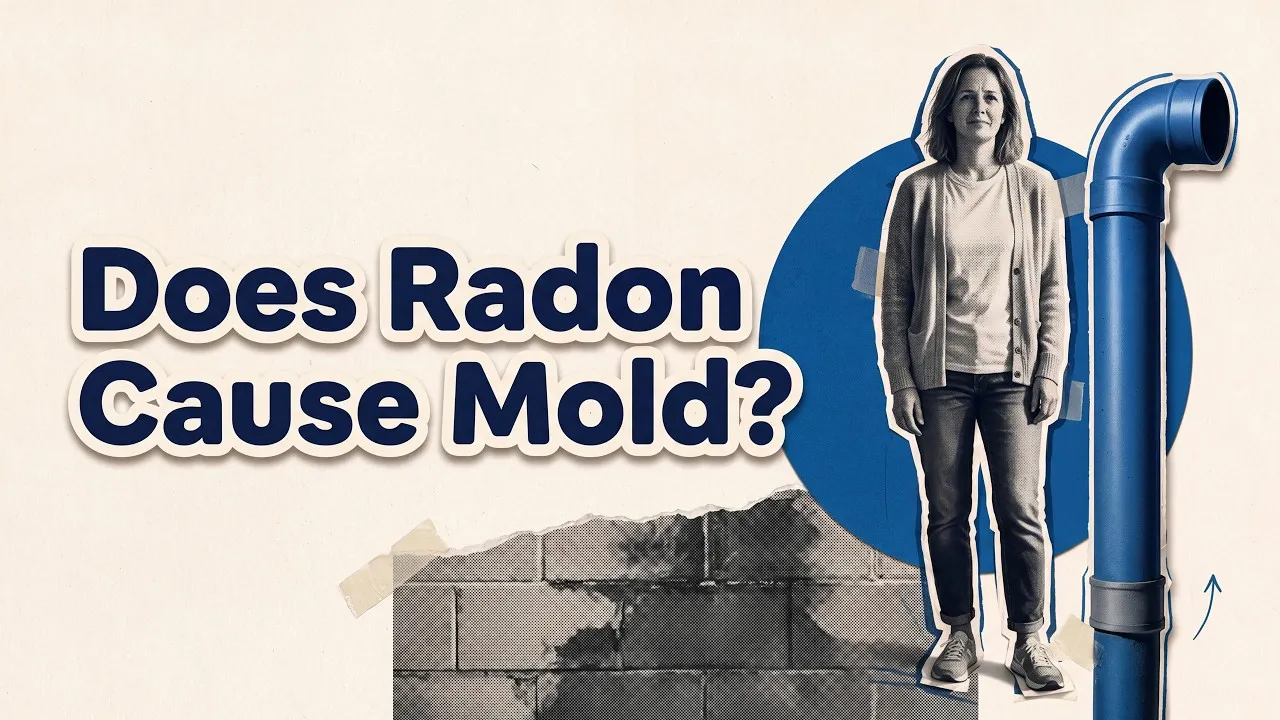
0:20 Three or four inch PVC piping travels up through the house, ending above the eave, at least ten feet from opening windows.
0:30 The in-line fan mounts in the attic, garage or outdoors, never in the basement, because any leak downstream pushes radon indoors.
0:40 The twist: caulking slab cracks and the floor-wall joint does not fix radon by itself, but it makes the fan's job possible.
0:50 Uneven liquid in the manometer means the fan is still pulling. Find certified contractors at Radon Mitigation In York dot com.
Key points
- A radon mitigation system is a pipe, a fan and a gauge. Together they keep the air pressure under the concrete slab lower than in the basement, so soil gas is pulled out instead of drifting in.
- It starts at the suction point: a hole cored through the slab, or the existing sump pit under a sealed lid.
- 3 or 4 inch PVC pipe runs up through or outside the house and ends above the eave, at least 10 feet from windows that open.
- The in-line fan goes in the attic, the garage or outdoors, never in the basement, because a leak on the pressure side of the fan would push radon indoors.
- Sealing slab cracks and the floor-wall joint does not fix radon on its own, but it lets the fan hold the pressure difference.
How to tell it is working
The U-tube manometer on the pipe shows uneven liquid levels while the fan is pulling. Level liquid means the fan has stopped. Retest every couple of years either way.
Find a contractor in York
Compare DEP-certified radon mitigation companies and radon fan service, or read the full guide to how a system works.